 Bill McCarthy
 Allen Daniels
Podcast: Download (Duration: 35:46 — 10.4MB)
 John Harvey opened services by reading from the first chapter of the letter of Philippians and encouraging us to seek and walk in the fellowship of Christ, both with one another and with God.
Text: Phil 1:3-5
Scriptural References: Eph 3:8-7; Matt 11:3-5: 1 Cor 1:9; Rev 5:9; Acts 2:41-42; 2 Cor 8:2-3
 Randy McCarthy followed up by discussing what he termed, “the biblical pattern for trusting God.” Randy read from Exodus 14 regarding the deliverance of the nation of Israel by allowing them to pass through the Red Sea on the dry sea bed. While this is a notable miracle, it is attested by several archeological and historical sources. As the nation camped on the beach next to the sea, they discovered themselves hemmed in by the pursing army of Pharoah. They naturally cried out in fear, wondering why God had led them to this place where they would be destroyed. God told Moses to tell the people, “Fear ye not, stand still and see the salvation of the Lord.” Exod 14:13. From this Randy pointed out a sequence that often takes place in the lives of people blessed by God in the Bible (e.g., Abraham, Job, Joshua, David, Paul, etc.), as well as a sequence that we often experience ourselves. Initially, God gives us a promise that, after perhaps us being unwilling to believe, we come to the place where we do believe God. We feel great relief and go forward confidently, trusting that God will bless us. It is often at this point when very serious troubles begin; we may be faced with a terrible, fearful situation, such as here with Pharoah’s army behind the nation and the impassable Red Sea in front. What usually happens to us in our lives is exactly what happened to the nation of Israel – we cry out in fear and unbelief. God nevertheless calls on us to not be afraid, stand up, stand still, and watch as He delivers us in a spectacular and wondrous way. We should therefore not faint when our faith is tested, but instead understand that as we travel in this world as followers of Christ, we should expect both what appear to be impossible problems and amazing, miraculous deliverances from God.
Text: Exodus 14: 13-14 (Reading beginning at verse 1)
Scriptural Reference: 1 Thes 5: 14-23
Podcast: Download (Duration: 39:43 — 10.5MB)
Randy McCarthy opened services by reading from Ephesians 1:3-11 and Romans 8:28-29 and spoke briefly about predestination. God predestined, or determined beforehand, the destiny of His people before the creation of the world. This destiny includes the facts that we would be adopted as God’s children, that we would have an eternal inheritance, and that we would be conformed to the image and glory of His Son Jesus Christ.
 Keith West
Trusting in God
Keith preached on how the Scriptures teach us to trust God. He noted that our national motto (“In God We Trust”) is present on the currency of the United States. To trust God means that we need to believe that He is able and willing to do what He has promised. He observed that since God created everything (Gen 1:1), it is not difficult for Him to do other things within His creation. Keith brought to mind three important characters who were presented with challenges of faith and who reacted in different ways (Zechariah, Luke 1:11-20; Mary, Luke 1:26-38; and Joseph, Matt 1:18-25). Keith encouraged us to be faithful to God’s promises even when we don’t understand how He will fulfill them.
Mark Wattenbarger
Having Courage in God
Mark followed up with the same theme by examining the life of Joshua. Joshua had been present during all the great works that God did through Moses in redeeming the nation of Israel from Egypt, giving them the Law and Tabernacle service, and providing for them in the wilderness. Nevertheless, it was something else when it became apparent that Joshua, not Moses, would be the one leading the people into the promised land. Both Moses and God told Joshua to “be strong and of a good courage.” Deut 31:7; Josh 1:6; Josh 1:9). Most importantly, Mark pointed out that God further said to Joshua, “Have I not commanded thee?” Mark encouraged us that, just like Joshua, if God commands us to do something, He will most certainly give us the grace and power to carry out His tasks.
Podcast: Download (Duration: 56:55 — 15.7MB)
 Allen Daniels
Brother Allen preached about the faith of Abel, Enoch, & Noah.
Text: Hebrews 10:38; Habakkuk 2:4
Scriptural References: Hebrews 11:1-5; Gen 4:1-8; 1 John 3:11-12; Jude 1:14; Gen 5:4-15; Luke 3:36-38; Gen 5:21-24; Rev 13:8; Gen 6:3-16
Podcast: Download (Duration: 50:51 — 15.5MB)
 Randy McCarthy
David’s Lamentation: The Story of Absalom
“And the king was much moved, and went up to the chamber over the gate, and wept: and as he went, thus he said, O my son Absalom, my son, my son Absalom! would God I had died for thee, O Absalom, my son, my son!”
Text: 2Samuel 18:33 Psalms 3:1-8; 2Samuel Chaps. 13-18
 Mark Wattenbarger
Faith Which Worketh by Love
James 2:1-20; John 13:34-35; Galatians 5:6b; 1 John 3:1; John 3:16; Matthew 25:39-40
James 2:18, “Yea, a man may say, Thou hast faith, and I have works: shew me thy faith without thy works, and I will shew thee my faith by my works.”
Matthew 25:39-40, “Or when saw we thee sick, or in prison, and came unto thee? 40 And the King shall answer and say unto them, Verily I say unto you, Inasmuch as ye have done it unto one of the least of these my brethren, ye have done it unto me.“
Podcast: Download (Duration: 54:31 — 15.0MB)
 Randy McCarthy
Evidence of the Resurrection
Referenced Scriptures: [Acts 17:20-34; 1Corinthians 15:1-8; 1Corinthians 2:14; Matthew 26:31; Zechariah 13:7; Matthew 28:5-10]
 Mark Wattenbarger
How does faith work? “…through faith we understand..””…but without faith it is impossible to please God ….” Knowledge and belief make our faith stronger; we believe in that which we know exists, but we must also trust in the source of our knowledge and belief; therefore, knowledge, belief, and trust are key aspects of our faith.
Referenced Scriptures: [Mark 16:9-14; Luke 24:24-31; Hebrews 11:1-6; II Thessalonians 3:1-2; Romans 10:13-14; 2Timothy 2:19; John 3:2-3; 2Samuel 22:1-3; Proverbs 3:5; Daniel 3:16-19]
Podcast: Download (Duration: 46:08 — 12.8MB)
Randy introduced services by reading from Ecclesiastes 2:1-17 and admonishes us that our happiness does not depend on the things we can obtain, but the joy comes in the labor itself and not in the final thing; therefore, let us enjoy our life under the sun as we labor together in the Lord’s Vineyard.
 Bill McCarthy Brother Bill commented briefly about how some of our older ministers of the past thought they had to prove our doctrine by quoting a multitude of Scriptures, but in his latter years, he has come to realize that the number of Scriptures quoted are not nearly as important as teaching a lesson that can be remembered from one or two.
Brother Bill then read from Luke 10:25-42, centering in on the question of the lawyer in verse 29, “Who is my neighbour?” In answer to the lawyer’s question, he then preached a very edifying message about Jesus’ parable of “The good Samaritan.” He summed up his remarks with the lesson of Mary and Martha, by admonishing us that in all our service to the Lord, to not forget to choose as Mary “that good part, which shall not be taken away.”
 Randy McCarthy Brother Randy read a passage of Scripture from Mark 9:14-29, drawing a contrast between the words of Jesus in verses 19 & 23, “O faithless generation, how long shall I be with you? how long shall I suffer you?” and “If thou canst believe, all things are possible to him that believeth.”
He then read the following eight passages of Scriptures, and asked two question: “What is the common denominator in these eight passages?” and “What are the lessons being taught in the healings of Jesus? ” Matt 9:22; Matt 15:28; Mark 10:52; Luke 17:19; Luke 5:20-24; Luke 7:47-50; Matt 8:2-3; Luke 7:6-9
Brother Randy then challenged us to compare and contrast the above eight Scriptural passages to Matthew 13:58, “And he did not many mighty works there because of their unbelief.” Here is the next question for us to ponder, “Will God work today where there is no faith being shown?” Jesus said, “If thou canst believe, all things are possible to him that believeth.”
Podcast: Download (Duration: 53:50 — 14.5MB)
 Bill McCarthy introduced services.
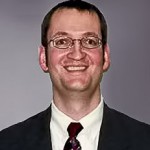 Mark Wattenbarger
Brother Mark takes us through the initial verses of Hebrews Chapter 12 to discuss the life of faith. Though it may be difficult to define, Scripture teaches us the life of faith is best defined by the actions we take. Abel, Abraham, Sara, Moses, Gideon, and others mentioned in Scripture are our evidence of what faithful lives look like. But, as the Spirit inspired Paul to write, our highest and best example of living faithful to the will of the Father is Jesus.
Podcast: Download (Duration: 39:40 — 11.0MB)
Bill McCarthy
The 7 Deadly Sins & Their Opposites
Pride<->Humility Envy<->Love Anger<->Kindness Sloth<->Zeal Gluttony<->Temperance Lust<->Self-Control
Main Topic: Faith & Prayer
Scripture References: 1Cor 13:13; Hebrews 11:1,3; 2Chron 20:6-12, 15;
Podcast: Download (Duration: 42:51 — 11.1MB)
Referenced Poems: “My Orders” by Ethelwyn Wetherald, “High Flight” by John Gillespie Magee
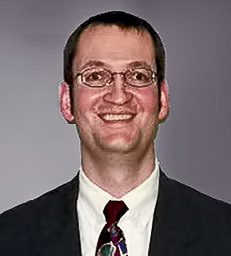
Mark Wattebarger discusses Hebrews 12:1-4. He gives us a brief outline of the history of the book and the reason Paul spends Chapter 11 listing men and women living their lives in faith. Elder Wattenbarger helps us understand the background for Paul’s powerful statement that, in the midst of trial and persecution, we should always be, “Looking unto Jesus, the author and finisher of our faith.”
Podcast: Download (Duration: 40:02 — 11.5MB)