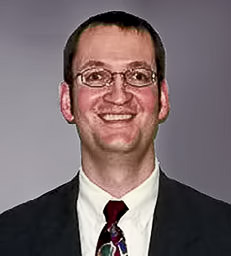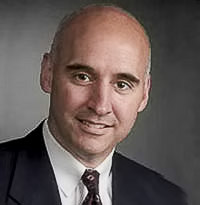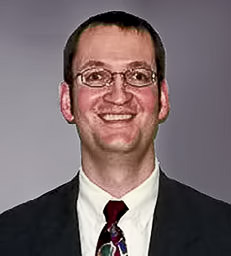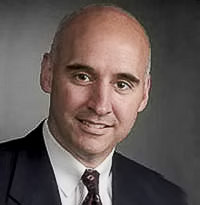
Mark Wattenbarger, Allen Daniels, & Randy McCarthy

Mark Wattenbarger

Text:  Proverbs 3:7

Allen Daniels

Text:  Psalm 37: 1-40,  Proverbs 3:5

Randy McCarthy

Text:  Matt 19:16

Randy McCarthy & Mark Wattenbarger

Randy McCarthy

Text:  Psalm 2:1-12, 2Sam 5:1-25

Mark Wattenbarger

Subject:  Communion

Text:  1Cor 10:1-33

What Profit?

markwBy: Elder Mark Wattenbarger

 And Esau said, Behold, I am at the point to die: and what profit shall this birthright do to me?  Gen 25:32

This is the earliest record we have of these two brothers following the background history on their birth.  We know that Jacob grabbed hold of Esau’s heel (Gen 25:26) at birth, and from thence forward there would be a rivalry between the two which would ultimately never abate.  What is striking about this event is Esau’s narrow view of time; his shortsightedness is alarming.  The worldly attitude of shortsightedness and “instant gratification” is still all too common among men.  I want to briefly consider the mental motivation in Esau’s thought process and compare it to what we find in today’s society.

Esau is what might be called a man’s man. He hunts; he is of the field and is perhaps the consummate outdoorsman.  He probably knew and understood the world’s creatures and he was the favorite of his father Isaac.  It appears that he was a man of action, not willing to let any insult go unpunished (see his reaction after Jacob usurps his blessing in Gen 27:41).  In addition to all this, Esau had little to no foresight of what was in front of him and the immediacy of the world around him was all he cared for.  All Esau knew was that he was hungry.

When Esau comes back to his parents’ tent to eat, there is his little brother Jacob making a meal.  And then Jacob, that conniver, makes him a deal.  If Esau will trade his “birthright” he can have some pottage.  And Esau responds in the worldliest way imaginable.  With no forethought he responds as quoted above.  The birthright is gone but what does it matter to Esau because he is no longer hungry? Esau will learn that visible benefits, or that which is seen, is often overshadowed by that which is unseen.  Esau lost an inheritance and was disregarded by God in exchange for a bowl of soup.

First, consider briefly the effect of what is unseen.  It is a term borrowed from Frederic Bastiat, a 19th century French economist.  His theory involved the idea that an economic cause can give rise to both a visible, immediate effect (that which is seen) and an invisible, sometimes a series of invisible, unfolding consequences (that which is unseen).  Accordingly, a cause, if not properly analyzed, can and often does have very damaging, unintended consequences.  For example, to use economics to explain, when property is taken from one individual and given to another, for whatever reason, there is no increase in the total amount of property.  It is like a person filling a bucket up with water from one end of a pool and dumping the bucket in the other end of the pool.

Esau, fulfilling the most immediate desire to fill an empty belly, gives up his birthright for food.  The immediate result is that he has eaten and is now satisfied.  This is that which is seen.

However, to satisfy his hunger, Esau has sold his birthright.  He no longer looks forward to his inheritance and will not be the leader of his family.  This is that which is unseen.

To appreciate that which is unseen one must briefly consider the meaning of a birthright.  The one possessing the birthright would be the head of the family.  At this time in history, it meant that the one who had it would be the priest of the family.  Furthermore, in this specific family, it meant that the one who had the birthright would be the ancestor of Christ.  So what value did Esau place on this?  It was worth a bowl of soup.

Ultimately, Esau would indeed serve Jacob as God foretold.  He would not be the head of the family or be the spiritual leader of a nation which would lead to Christ.  The unseen effect is trouble, strife and constant warfare between his descendants and those of Jacob, his brother.  Waste and famine, war and ultimately extermination would be the lot of the Edomites.  Was it worth the soup?

Sadly, this attitude of instant gratification, regardless of the consequences, is an attitude alive and far too prevalent in the world today.  Truly, there is nothing new under the sun! (Ecclesiastes 1:9)

Today, we see men frittering away time and money to satisfy the desires of their flesh, giving no consideration to what is lost by such actions.  But wait, says wisdom, how do you plan to pay for the consequences?  Consequences are nothing to me, says man, I will deal with them later.  Does this hypothetical conversation sound familiar?  Have you had this talk with a child, with a decision maker in the community, with yourself?  You are in foul company to take the part of Esau in this narrative; as a child of the King much better is expected of you.

How often have we heard, “This will do so much good and it will bring some good result or some visible outcome for our benefit.”  And almost as often, just as Esau lost all claim to his “unseen” inheritance, lost is the benefit of something “unseen” as a result of uncaring and shortsighted actions.

Let’s bring this right down to brass tacks, as my father would say.  Every 67 inch flat screen plasma TV is a few car payments, some food, or a child’s education.  Every minute spent watching that TV is a minute lost in the pages of the history book being written by the lives of family and friends.  Every moment spent doing something to satisfy self is a moment in which the counsel of God is disregarded and effectively selling a precious birthright for something as insignificant as a bowl of soup.  How dismal, how foolish, how vain we are!

That which is seen is the easier fruit to reach.  The bitter fruit of consequence, that which is unseen, is revealed in two very different ways.  Often we learn through experience.  Experience knows no mercy, is rough and harsh in its lessons.  Experience is often a brutal teacher and never takes a holiday.  It forces us to learn by making us feel the effects of our actions.

We can also learn from foresight.  Foresight, the ability to look ahead and perceive possible problems or obstacles, is a much gentler teacher, to paraphrase Bastiat once again.  I have often heard from trustworthy men that good judgment comes from experience and, sadly, experience comes from exercising bad judgment.

The Lord is patient and longsuffering.  In all our efforts, in our daily lives, as citizens of heaven and pilgrims in this life, let us “be not conformed to this world” and its way of seeking the low hanging fruit and instead “be transformed”, thinking like the godly and exercising the forethought with which God has blessed us above every creature.  No beast can consider the unseen and act on foresight.  We are unlike any other creatures in God’s creation!  Let Esau have his soup.  Let us instead be like Christ who, with foresight and the ability to see the results of His actions, looked to the unseen consequence of His loving sacrifice for His people.

When we had no way to secure a heavenly home, Jesus, “for the joy that was set before him endured the cross, despising the shame” and sat “down at the right hand of the throne of God.” (Hebrews 12:2) Let us look to that which is unseen and live the way Jesus would have us live!  Jesus gave us an example, the example of foresight and thoughtful action.

Published: 2012-04-15 by MW

The Spirit | Haggai

Randy McCarthy spoke about The Spirit


Mark Wattenbarger spoke about Haggai

Mark Wattenbarger & Randy McCarthy

Mark Wattenbarger

Randy McCarthy

<NC>

Keith West & Mark Wattenbarger

Keith West

Mark Wattenbarger

<NC>

Randy McCarthy & Mark Wattenbarger

Randy McCarthy

Subject:  Ephesus (Part 2 of 2)

Mark Wattenbarger

Subject:  Romans – Chapter 8

Randy McCarthy & Mark Wattenbarger

Randy McCarthy

Mark Wattenbarger


Subject:  Fools    <NC>

A Brief Discourse on Baptism

markwBy: Elder Mark Wattenbarger

Know ye not, that so many of us as were baptized into Jesus Christ were baptized into his death?” Romans 6:3

Baptism becomes indelibly linked with the idea of death and resurrection in a deeply spiritual way.  As the concept of baptism unfolds in scripture we can learn a great deal about what it is, what is its purpose in our lives, and how it is practiced today.

The physical death of our Lord was shameful, excruciating and symbolized the extreme sacrifice typical of one who is totally committed to serving.  Likewise, as Christ died, we are taught to “mortify the deeds of our flesh” and become “transformed by the renewing of our minds.”  This transformation takes place long before we enter the water.  By studying the events in Matthew chapter 3 we can gain some insight in to the method of baptism as well as the prerequisite state of the heart in each one who submits to baptism.

Early in chapter 3, Matthew writes about the events surrounding the baptism of Jesus.  It was notable as many people came to John at the Jordan River to be baptized.  He was a person spoken of in prophecy (v. 3) and was therefore a person of importance.  We notice, however, from verse 6 that a short phrase can reveal very much.  It is in this verse that we learn that these people came “confessing their sins.”  The question to ask is, “Why?”  Why come confessing sins unless the weight of the sin had settled already in the heart?  This one simple phrase seems to clearly reveal the state of their hearts, the felt need for a Savior.  If one is burdened with the weight of sin then the need to find a way out of that condemnation becomes acute.  Thus, these came from Jerusalem and all Judea confessing their sins.  We can reasonably conclude that a change in the heart and in the desire had occurred drawing people to John and the message he preached, “Repent ye, for the kingdom of heaven is at hand.”  Baptism is not the method for bringing out this change because it has happened already.  The feeling of a need to find salvation and redemption from one’s own sinfulness is evidence of being born again.  Baptism is a ritual washing which illustrates the physical washing which has already occurred.

We further read, as John speaks later in this chapter, about how John perceives the work which he is doing.  In verse 11 John says, “I indeed baptize you with water unto repentance…”  The word to draw attention to is “unto”.  This word means “because of” or “as a result of”.  It is exactly the same word translated “for” in Acts 2:38 where Peter says that the people should be baptized in the name of Christ “for the remission of sins”.  Because of the remission of sins, brought about by the blood of Christ, they should be baptized.  The repentance on the part of people who came to John was the evidence he was speaking of (Matt 3:8) which is put forward as proof positive that these people knew that a Savior is a necessity in their lives.  John says that seeking baptism with water is evidence that remission of sins is a past event.  He baptized with water because of the remission which had already occurred.  This before anyone ever set foot in the river!  So John the preacher takes himself out of the way, he is not needed except as the proper administrator for baptism.  It is the answer of a good conscience toward God as Peter states and it is not the washing away of the filth of the flesh.  That filth of the flesh is washed away by the very hand of God himself!

Adopted by Him, overwhelmed by His grace and the Spirit, baptized by the Holy Ghost and with fire, let each and every one of His children submit to baptism.  Let the answer of a good conscience ring through the words and deeds of each child of grace.  There is hope for every one seeking a solid place to stand when the world shifts underneath our feet.  We are loved by God with a love that never ends and granted entrance to a place of refuge while we yet live.  Glory to God Almighty, our Father in heaven!  We are encouraged by the example of our precious Lord to come to the baptismal water and acknowledge Him as our master.  Let the fruits of repentance be known and may we all rejoice in the symbol of baptism, symbol of that amazing change which is made in each of us, the miracle of new life, new hope and eternal glory secured by Christ our Lord, our Savior, our Redeemer, our Defender and our Friend!

Published: 2011-06-05 by MW

Halting Opinions

markwBy: Elder Mark Wattenbarger

 And Elijah came unto all the people, and said, How long halt [pasach] ye between two opinions? If the LORD be God, follow him: but if Baal, then follow him. And the people answered him not a word.  1 Ki 18:21

And they took the bullock which was given them, and they dressed it, and called on the name of Baal from morning even until noon, saying, O Baal, hear us. But there was no voice, nor any that answered. And they leaped [pasach] upon the altar which was made.  1 Ki 18:26

pasach – Hebrew word meaning to leap and dance, to hesitate or lurch as a lame man would while walking


Elijah is sent to rebuke the people and force them to see the wild dance they are doing and their frantic attempts to balance worldliness with worship of Jehovah. This is further illustrated when the writer of 1 Kings uses the same word picture to describe the way in which the prophets of Baal dance to call upon their god as Elijah uses to describe how the people are trying to worship both Jehovah and Baal. The Israelites, like men today, tried to please the world while at the same time hoping to please God. Trying to blend a desire to please men with the worship of God is something He will not tolerate. God’s people needed to be reminded that “the friendship of the world is enmity with God.” (James 4:4)

The northern kingdom of Israel had fallen so low that idol worship was the official religion. King Ahab began his reign approximately 56 years after Jeroboam had first instituted idol worship in the kingdom of Israel (1 Ki 12:28). Ahab officially instituted the worship of Baal under the heavy influence of his wife (1 Ki 18:4). Perhaps to curry favor, or at least to keep from losing one’s life, the people tried to play both sides. In public, Baal was the god of the kingdom and by choice the Israelites offered sacrifice to this idol. Perhaps they tried to honor Jehovah in their private homes in an attempt to assuage the guilt.

Having set the scene for the prophets of Baal and the people, (1 Ki 18:19, 22-23, 24) Elijah truly offers the people the opportunity to see the powerlessness of Baal and the awesome power of Jehovah. No fire came to the offering to Baal, no sound from the heaven, no word of the god, absolutely nothing but the wild, gyrating, lurching dance of the false prophets was heard or seen for an entire day.

The dramatic scene of fire coming from heaven, licking up the water with which the offering had been drenched (I Ki 18:33-35, 38) and consuming the dust around the altar must have been the powerful shock and awe needed to awaken the people of Israel to their wickedness. No doubt could exist that God had worked an amazing miracle. And the people, troubled by the show of God’s power, answered with proper reverence and fear (1 Ki 18:39)

So what can we learn from this event from thousands of years ago? Sometimes in life, the drama of a decision point, such as in 1 Kings 18, is needed to arrest our attention and stop us in our careening path. God is a jealous God (Exo 20:2-3) and demands obedience. But just as in Israel almost 3,000 years ago, men seek to serve the public god while still serving Jehovah.  Our attention seems to be constantly drawn in multiple directions and the wisdom of the world is to try to please all parties and serve both the world and God.  The Hebrew word pasach, describing the lurching, hesitating walk of a lame man, is an apt picture of this untenable dual life God’s child sometimes tries to lead.

Ever hear anyone say, “It is easier to ask forgiveness than permission?”  The men of the world tell us that we can serve God and the gods of the world. They try to teach us that our public life and our private life can be kept separate and that it doesn’t matter what we do Monday through Friday as long as we are in the pew on Sunday with a repentant heart.

However, brethren, we have been sanctified for something better! God has called us to a higher purpose, a more full life. We must be holy as He is holy. We are called on to do what is right, to serve God with our whole life, public and private. We cannot careen wildly from one extreme to another, honoring God this time and then (just this once) satisfying the world and our own desires.

The strength that we need can be found in the hope that fills our hearts, the Spirit of God which dwells in us. God graciously gives us the tools and the ability that we need to carry on and do what God has asked of us (Phil 2:13). God’s people are always God’s people, all the time and everywhere.

As a result, our whole life, public and private, should be a reflection of God’s love for us and should be our way of showing our love for Him. What we do in our day to day lives should be just as honoring to God as what we do on our Sundays. We will only find unhappiness and discontent, and often an inexplicable anger, when we try to serve both the public god and the true God.

So let us set our affections on things above and live a complete life dedicated to our loving Father whose grace and mercy abounds toward us. Oh, God, help us understand that every aspect of our lives should be to honor and glorify your name and please grant us the strength to walk worthy of the vocation with which we have been called. Praise God, for His mercy endures forever!

Published: 2011-03-13 by MW